
Helping Students Understand The Main Idea

What is the main idea of a story anyway? If your students are like mine and take the Dibels or Acadiance testing, you are familiar with the subjective testing of retell, which includes the delivery of the main idea of a story read.
Telling the main idea of a story is actually a hard concept for students to understand as it is a confusing and difficult skill, which needs to be strategically taught. After all, if it is misunderstood, students continue worksheet after worksheet — test after test to wallow in their confusion. Without promising feedback, simply trying their best at giving answers that may or may not please the subjective grader is a hopeless effort.
What is the Main Idea?
The main idea is asking the reader to state the authors purpose, what is it the author is trying to tell you? “Whenever someone tells you a story they have a reason behind it, maybe a friend played a fun game yesterday and wants to tell you about it. Knowing why a story is told and what information the teller wants to get across is important in understanding the story.” This knowledge along with the understanding of the characters, conflict, and the solution is simply put— the Main Idea of a story.
Here are some of the ways I teach my student exactly how to find the main idea of a story.
Strategy 1: Pay Attention to the Title of the Story. Author’s generally include the topic of their story in the title, especially in works of nonfiction. For example, this title gives the reader a great deal of insight: Giraffes: Towering Beauties of the Savanna. Instantly a reader knows the author believes the giraffe to be a beautiful animal that is taller than other animals (towering), and lives in the Savanna.
Strategy 2: Think As You Read: Don’t rush through your reading. Rather think about the story as you are read along, making pictures in your brain as you go. If you truly engage in the story, you are more likely to remember what you read.
Strategy 3: Find The Conflict and Action in the Story: Dig deep into the story. Think about the conflict, the action, how problems were solved. This information will give you more information into the author’s purpose in writing the story. What is it the characters learned, how did things change, how were things solved?
Strategy 4: Keep it Simple: Know that summarizing the main idea of a story is actually easier than it seems. Simply restate the title, tell the characters, setting, a brief description of the beginning (set the stage), middle (what is the problem), end (how was it solved), and you have given the main idea, or the author’s purpose.

Product Description
Bee Book Study and Writing Activities
This bee book study unit is a great way to meet important common core standards in literacy and informational text using the book The Very Greedy Bee by Steve Smallman, along with an non-fiction title on bees.
All lessons are easily adaptable to students from Pre-K through 1st grade. The lessons are fun and engaging and cover many areas of language arts. All lessons can be carried over to more than one day, depending on the time you have available.
*If you don’t have a copy of The Very Greedy Bee, or a nonfiction Bee book, they can be found readily on Youtube.
Contents Include:
Lesson #1 Prediction
Lesson #2 Inference
Lesson #3 Character Traits
Lesson #4 Story Elements
Lesson #5 Adjectives
Lesson #6 Non Fiction
Lesson #7 Celebrate
Lesson #8 Extend Through Art
© Kathy Crane Kindergarten Kiosk
Related Products
Insect Writing and Literacy Center Activities
Follow For Updates and Freebies!
Be alerted as products are updated and/or added to. Get Special Freebies.

Product Description
Snowman Book Study and Writing Activities
This snowmen book study unit is a great way to meet important common core standards in literacy and informational text using the text Sneezy The Snowman by Maureen Wright.
All lessons are easily adaptable to students from Pre-K through 2nd grade. The lessons are fun and engaging and cover many areas of language arts.All lessons can be carried over to more than one day, depending on the time you have available.
If you don’t have a copy of Sneezy the Snowman, you can find the book read online. Any other snowman book of your choosing is also needed.
Contents Include:
Lesson #1 Visualize
Lesson #2 Retell
Lesson #3 Connect
Lesson #4 Compare
Lesson #5 Extend Through Art
Lesson #6 Extend Through Writing
© Kathy Crane Kindergarten Kiosk
Related Products
Spider and Bat Writing Activities
Bee Book Study and Writing Activities
Follow For Updates and Freebies!
Be alerted as products are updated and/or added to. Get Special Freebies.
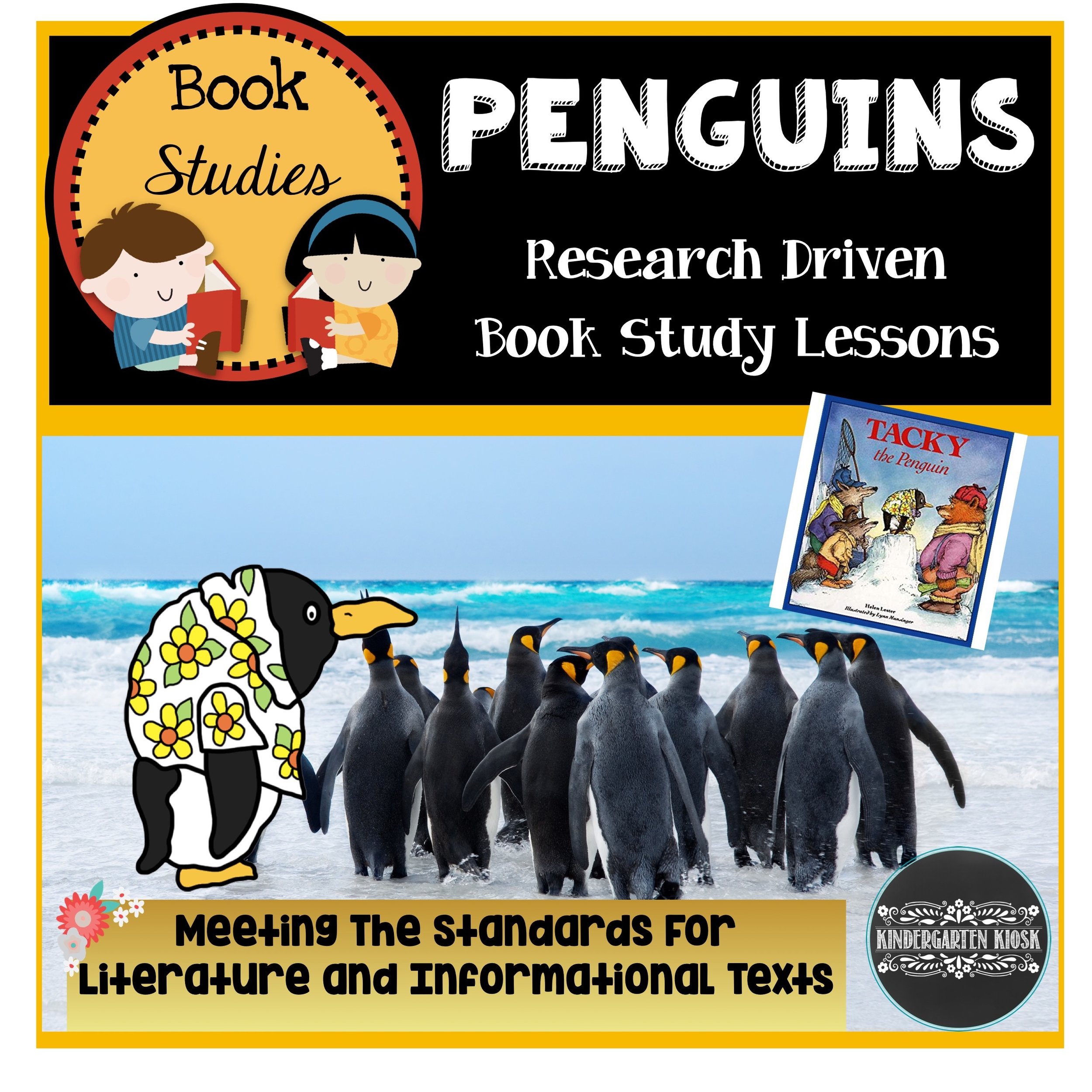
Penguin Book Study and Writing Activities
This penguin book study unit is a great way to meet important common core standards in literacy and informational text using the text Tacky The Penguin by Lynn Munsinger.
All lessons are easily adaptable to students from Pre-K through 1st grade. The lessons are fun and engaging and cover many areas of language arts. All lessons can be carried over to more than one day, depending on the time you have available.
If you don’t have a copy of Tacky The Penguin, or a nonfiction Penguin book, they can be found readily on Youtube.
Contents Include:
Lesson #1 Prediction
Lesson #2 Inference
Lesson #3 Retell
Lesson #4 Genre
Lesson #5 Extend
Lesson #6 Celebrate
© Kathy Crane Kindergarten Kiosk
Related Products
Spider and Bat Writing Activities
Bee Book Study and Writing Activities
Snowman Book Study and Writing Activities
Snowy Day Book Study and Writing Activities
Follow For Updates and Freebies!
Be alerted as products are updated and/or added to. Get Special Freebies.

Product Description
Snowy Day and Jack Frost Book Study and Writing Activities
This snow day and Jack Frost book study unit is a great way to meet important common core standards in literacy and informational text using quality text such as The Snowy Day by Ezra jack Keats and Jack Frost by Kazuno Korara.
All lessons are easily adaptable to students from Pre-K through 1st grade. The lessons are fun and engaging and cover many areas of language arts. All lessons can be carried over to more than one day, depending on the time you have available.
If you don’t have a copy of The Snowy Day or Jack Frost, they can be found readily on Youtube.
Contents Include:
Lesson #1 Visualize
Lesson #2 Retell
Lesson #3 Predict
Lesson #4 Connect
Lesson #5 Compare
Lesson #6 Extend Through Art
Lesson #7 Extend Through Writing
Lesson #8 Extend Through Art
Lesson #9 Reading at Level.
© Kathy Crane Kindergarten Kiosk
Related Products
Spider and Bat Writing Activities
Bee Book Study and Writing Activities
Snowman Book Study and Writing Activities
Snowy Day Book Study and Writing Activities
Follow For Updates and Freebies!
Be alerted as products are updated and/or added to. Get Special Freebies.